

Education in Russia · Scholarship journey
My Education in Russia Scholarship Journey
How I received a Russian Government Scholarship, began my master's degree in Chelyabinsk, and learned what funded study in Russia actually covers.

Quick Answer
I received a Russian Government Scholarship through the Education in Russia system for my master's studies at South Ural State University in Chelyabinsk.
In my case, the scholarship covered my full tuition fees and included an initial monthly stipend of approximately 3,000 RUB.
However, the scholarship did not cover my complete living costs. I still needed money for accommodation, food, transportation, insurance, migration formalities, winter clothing, travel, and personal expenses.
My Education in Russia Experience
When I first considered studying abroad, the financial barrier looked larger than the academic one.
Tuition fees, visas, flights, accommodation, and everyday expenses can make an international degree financially unrealistic before the application process even begins. This is why I started investigating education in Russia and the scholarship opportunities available to international students.
I am an Indian student from Kolkata with a bachelor's background in Computer Science. I am currently pursuing a master's degree in Economics and International Business in Chelyabinsk, Russia.
My official study period runs from September 2025 to August 2027. I received my Russian Government Scholarship through the official Education in Russia application system in 2026.
This article is not a generic summary of scholarship rules. It documents what happened in my case: why I applied, how the scholarship worked, what it covered, what it did not cover, and what living in Russia as an international student has required from me.
My Scholarship Experience at a Glance
Academic Route
- Nationality: Indian
- Previous education: Bachelor's degree in Computer Science
- Current degree: Master's in Economics and International Business
- Study location: Chelyabinsk, Russia
- Study period: September 2025 to August 2027
- Scholarship: Russian Government Scholarship
- Scholarship awarded: 2026
Financial Coverage
- Full tuition covered in my case
- Initial stipend of approximately 3,000 RUB per month
- Complete living expenses were not covered
- A separate personal budget was required
Why I Chose to Study in Russia
I wanted an internationally recognized master's degree without accepting a level of tuition debt that would control my financial choices for years.
Russia became a serious option because the government scholarship could remove the tuition cost rather than merely reduce it.
I was also interested in economics, international markets, commodities, finance, and business strategy. Studying in Russia placed me inside an economy with an important role in energy, trade, industry, and relations with Asian markets.
For an Indian student moving from Computer Science into economics and international business, this perspective was relevant.
My decision was not based on the belief that studying in Russia would be easy. I expected a language barrier, cold winters, bureaucracy, cultural differences, and administrative challenges.
The scholarship made the opportunity financially possible. It did not remove the work required to live and study in another country.
How I Applied Through Education in Russia
The Education in Russia scholarship process involved more than completing one application form.
I had to prepare academic records, passport information, translated documents, programme preferences, and supporting materials. I also had to monitor my application, respond to corrections, and ensure that my university and scholarship information remained consistent.
My strongest practical lesson is simple: treat every name, date, programme code, document version, and application update as important.
Small inconsistencies can create long delays when the scholarship system, university, migration authorities, and visa process all depend on the same records.
Applicants should use the official Education in Russia portal for current eligibility requirements, deadlines, documents, and country-specific instructions. My experience explains the process from a student's perspective, but it does not replace current official rules.
The Application Sequence That Worked for Me
- I researched programmes and Russian universities that matched my academic direction.
- I prepared my passport, previous degree documents, academic transcripts, translations, and supporting materials.
- I applied through the official Education in Russia system.
- I selected my preferred programmes and universities.
- I monitored my application and corrected problems when the selected study route did not reflect my intended direct entry into a master's programme.
- After receiving confirmation, I coordinated the remaining admission and documentation requirements with the university.
The process required patience.
Applicants should not assume that silence automatically means rejection. At the same time, they should not remain passive. Keep copies of submissions, application numbers, status updates, and official correspondence.
What the Russian Government Scholarship Covered for Me
The largest benefit was full tuition coverage for my master's education.
This changed the financial calculation completely. Tuition is normally one of the largest fixed expenses associated with an international degree. Removing that expense made studying abroad realistic for me.
I was also eligible for an initial monthly student stipend of approximately 3,000 Russian rubles.
This amount describes my personal situation. Stipend amounts and eligibility can differ according to the university, academic status, study year, and applicable regulations.
The scholarship made my degree affordable. It did not make everyday life in Russia free.
Expenses the Scholarship Did Not Fully Cover
I still needed to budget for:
- Accommodation or dormitory charges
- Food and household supplies
- Local transportation
- Mobile service and internet
- Health insurance
- Medical expenses
- Visa and migration documentation
- Registration-related expenses
- Winter clothing
- Flights and other travel
- Personal expenses
- Emergency expenses
A stipend of approximately 3,000 RUB should be treated as supplementary support, not as a complete living allowance.
International students need a separate monthly budget. The required amount depends heavily on the city, type of accommodation, lifestyle, and current prices.
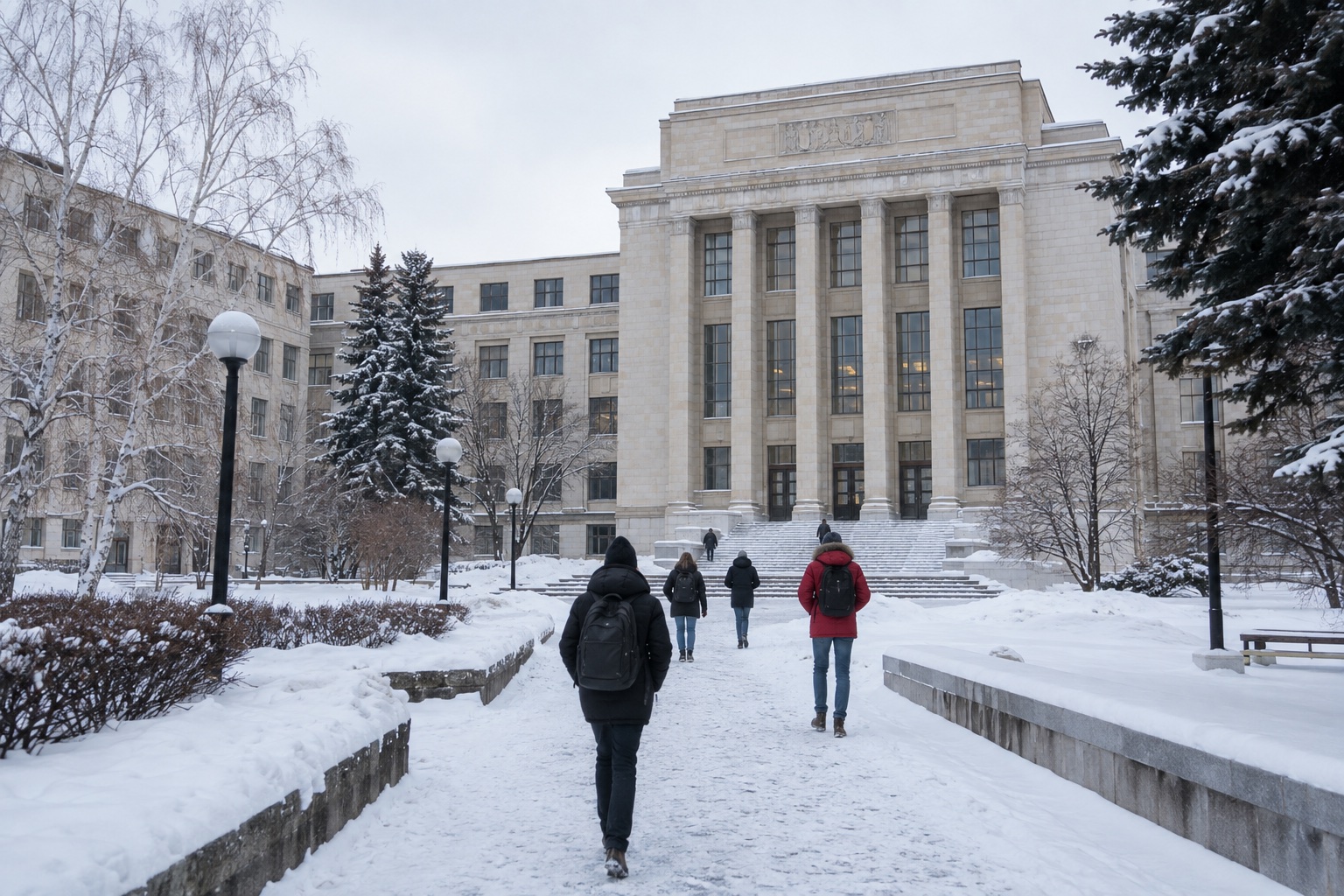
Joining a Russian University in Chelyabinsk
My scholarship journey led me to South Ural State University in Chelyabinsk, a major industrial city in the Ural region.
International applicants should compare the programme, teaching language, curriculum, accommodation, and city-level costs rather than judging the entire experience from a general description of Russia.
My master's programme combines economics, international business, management, research, and quantitative work.
Moving into this field after studying Computer Science widened my academic direction. It helped me connect technical problem-solving with markets, policy, trade, and business decisions.
The admission and enrolment process demanded careful document management.
International students may need to manage:
- Translated academic documents
- Passport translations
- Medical documentation
- Health insurance
- Migration registration
- Visa procedures
- University portals
- Academic contracts
- Communication with several departments
Applicants should keep copies of every document and important conversation. Never assume that one university department automatically knows what another department has told you.
What Studying in Russia Is Actually Like
Studying in Russia involves much more than attending university classes.
International students must also learn how to manage daily life, administrative systems, finances, employment, transportation, healthcare, and communication in another language.
The Russian Language Affects Everything
The Russian language has been one of the most important parts of my experience.
Even when some academic work is available in English, daily life operates mainly in Russian.
Russian becomes necessary or extremely useful when dealing with:
- Shops and supermarkets
- Public transportation
- Banks
- Clinics and hospitals
- Government offices
- Accommodation
- University administration
- Employment
- Emergencies
- Everyday conversations
If I restarted this journey, I would begin learning Russian much earlier.
Applicants should aim beyond memorized tourist phrases. Basic listening skills, reading forms, asking follow-up questions, and understanding administrative vocabulary have direct practical value.
Chelyabinsk Is Not Moscow
Russia is too large for one city to represent the entire international-student experience.
Chelyabinsk does not offer the same lifestyle, prices, or international environment as Moscow or Saint Petersburg.
It provides a closer view of ordinary life in a regional industrial city. Living costs may be more manageable, but daily Russian becomes more important because fewer situations can be handled entirely in English.
The climate also requires serious preparation. International students arriving from warmer countries should budget for a proper winter jacket, insulated footwear, gloves, thermal clothing, and other cold-weather essentials.
Scholarship Does Not Eliminate Pressure
During my studies, I also worked in Chelyabinsk.
Combining employment with a full-time master's degree reduced the time available for research, assignments, Russian-language study, and rest.
Employment can provide income, independence, and language exposure. However, excessive working hours can damage academic performance.
Students should calculate whether their work schedule leaves enough time for:
- Classes
- Assignments
- Research
- Internship requirements
- Examinations
- Russian-language study
- Sleep and recovery
Receiving a scholarship reduces financial pressure, but it does not eliminate the need for discipline, budgeting, and time management.
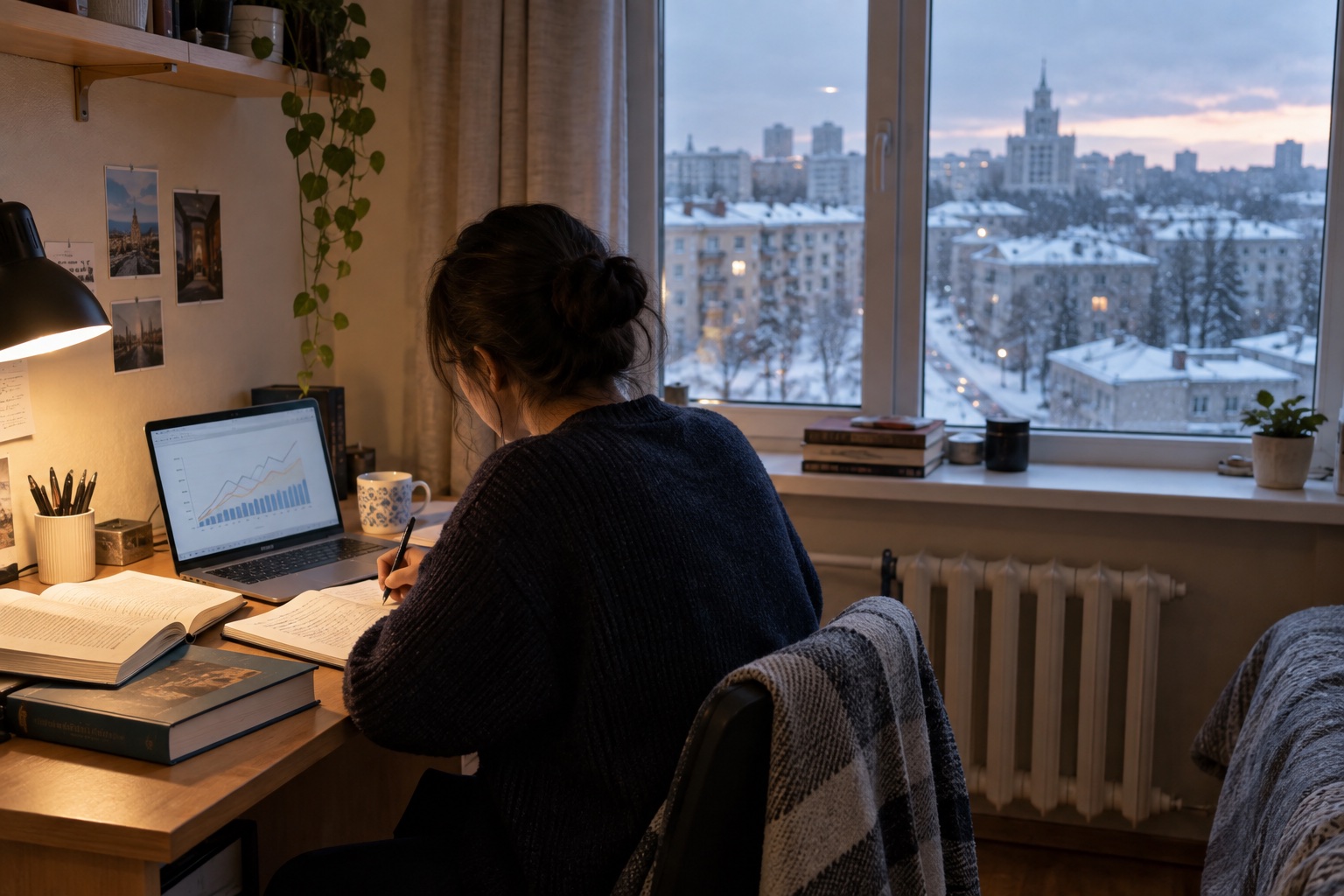
Challenges I Experienced
My experience has included both valuable opportunities and serious difficulties.
Some of the main challenges were:
- Understanding administrative procedures
- Managing translated documents
- Following up with different departments
- Dealing with the Russian-language barrier
- Adjusting to the climate
- Financing living expenses
- Balancing employment with academic work
- Understanding grading expectations
- Managing strict academic formatting requirements
I also experienced administrative delays and difficult grading situations.
These are my personal experiences. They do not represent every professor, department, or international student.
However, they taught me to preserve written communication, understand formal procedures, submit work early, and separate documented facts from frustration.
What I Would Do Differently
If I were starting again, I would make several changes.
First, I would begin learning Russian before arriving. Language ability affects independence, employment, administration, social life, and personal safety.
Second, I would research the specific programme and city more deeply. Studying in Moscow is not the same as studying in Chelyabinsk, Kazan, Tomsk, or Saint Petersburg.
Third, I would create a realistic living budget before travelling. Tuition coverage does not automatically solve accommodation, food, clothing, and transportation costs.
Fourth, I would organize every document digitally and physically. I would keep separate folders for admission, scholarship, visa, migration, medical, academic, and financial records.
Finally, I would protect my study time more aggressively. Working too many hours while completing a full-time degree creates predictable academic problems.
My Advice for Future Applicants
1. Choose the Programme Before Choosing the Country
Read the curriculum carefully. Verify the teaching language, subjects, academic requirements, and career relevance.
2. Use Official Sources for Current Rules
Scholarship requirements, deadlines, and procedures can change. Blogs and student experiences provide context, but official sources determine the actual rules.
3. Calculate Living Costs Separately
Tuition coverage is not the same as a complete living grant. Prepare a separate budget for normal and emergency expenses.
4. Start Learning Russian Before Arrival
Language ability affects daily independence, employment opportunities, administration, healthcare, and communication.
5. Keep Every Document
Save scans, translations, receipts, application records, contracts, and official messages.
6. Research the Specific City
Climate, rent, transport, employment opportunities, and English-language availability vary widely across Russia.
7. Protect Your Academic Time
Do not create a work schedule that makes academic failure predictable.
How This Experience Influenced My Work
Many international students face similar problems, but the necessary information is often divided across university websites, official documents, emails, portals, and informal conversations.
My experience navigating this fragmented information influenced UniAssist, a verified-source university information assistant I am developing for international students.
The objective is to help students find reliable answers about admissions, scholarships, accommodation, visas, and academic policies without depending entirely on scattered or outdated information.
Was the Education in Russia Scholarship Worth It?
For me, yes.
The Russian Government Scholarship removed the tuition barrier and gave me access to a master's degree in Russia.
However, the honest answer includes both sides:
- Funded tuition and continuing living costs
- Academic opportunity and language pressure
- International experience and demanding administration
- Financial support and the continuing need to work
- Personal growth and significant adjustment
The scholarship created an opportunity that may otherwise have been financially inaccessible. It did not make the experience effortless.
Frequently Asked Questions
What Is the Education in Russia Scholarship?
The phrase commonly refers to the Russian Government Scholarship application route available to international applicants through the official Education in Russia system.
Current eligibility rules, deadlines, and selection procedures should be checked for the applicant's country and application year.
Can International Students Study in Russia for Free?
A government-funded place may cover tuition.
That does not necessarily make the entire experience free. Students may still need to pay for accommodation, food, insurance, transportation, documents, travel, clothing, and personal expenses.
How Much Stipend Did I Receive?
In my case, the initial monthly stipend was approximately 3,000 RUB.
This is a personal-experience figure, not a guaranteed national amount for every international student.
Was 3,000 RUB Enough to Live On?
No.
It functioned as limited additional support. I needed other money for normal living expenses in Chelyabinsk.
Which University Did I Attend Through the Scholarship?
I study at South Ural State University in Chelyabinsk, Russia, in a master's programme in Economics and International Business.
Do International Students Need Russian?
Requirements depend on the academic programme, but Russian is extremely useful even for students whose academic work is available in English.
Daily life, university administration, employment, healthcare, and local communication rely heavily on Russian.
Is Studying in Russia Worth It for Indian Students?
It can be worthwhile when the programme fits the student's goals, the funding conditions are clear, the city is affordable, and the student is prepared for Russian-language and administrative demands.
The decision should be based on the specific university and programme, not only on the existence of a scholarship.
Does the Scholarship Cover Accommodation?
My scholarship covered tuition, but it did not provide a complete living allowance. Accommodation arrangements and charges should be verified separately for the selected university.
Where Should Applicants Begin?
Begin with the official Education in Russia application system. After selecting a programme, verify university-specific requirements directly with the institution.
Use student experiences for practical context, but rely on official sources for deadlines, eligibility, documents, and formal procedures.
Final Verdict
Applicants should neither romanticize nor automatically dismiss studying in Russia.
Treat it as a serious academic and financial decision. Verify the current rules, evaluate the exact university and city, prepare a realistic budget, and begin learning Russian early.
For me, the Education in Russia scholarship created a valuable opportunity by covering my master's tuition and providing a small monthly stipend.
The experience has required persistence, language learning, financial planning, administrative discipline, and cultural adjustment.
That complete reality—not only the scholarship announcement—is what future applicants need to understand.
This article separates my first-hand experience from current official requirements. Scholarship rules, stipend arrangements, and living costs can change. Last reviewed in September 2026.